Keywords: Aurora Series columns, Generation 4, column heater, nanoElute 2, UHPLC system, Bruker, timsTOF HT, mass spectrometer, chromatography, peak widths, back-pressure stability, reproducibility, proteomics, FWHM, column longevity, HeLa tryptic digest, QC runs, stability, durability, resolution, selectivity.

INTRODUCTION
Reliable and reproducible chromatographic performance is critical for achieving consistent peptide and protein identification in LC-MS-based proteomics. Generation 4 Aurora Series columns have been engineered to deliver exceptional separation quality and stability under demanding analytical conditions. Refined manufacturing techniques enable superior peak symmetry, reproducibility, and chromatographic consistency across extended operation.
Longevity and robustness were central to the design of Generation 4. Each column is built to withstand the high-pressure demands of long-term use while maintaining stable backpressure and uniform peak widths. The result is a column range that ensures sustained analytical precision, minimal performance drift, and greater longevity without compromising selectivity or resolution.
METHODS
LC-MS Analysis:
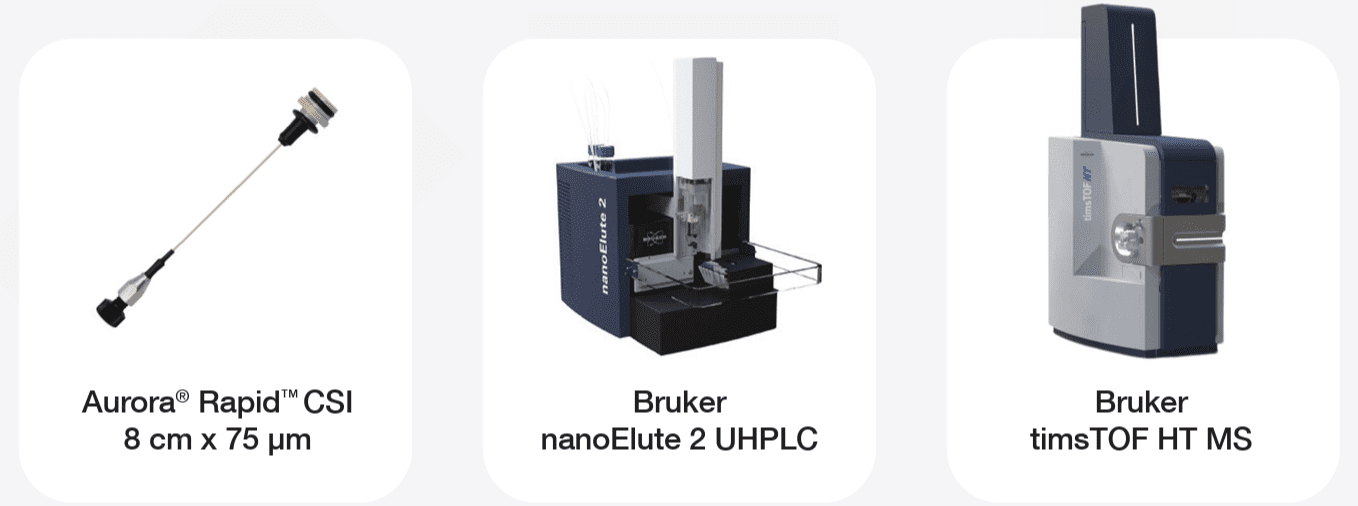
LC–MS/MS analyses were performed on a timsTOF HT mass spectrometer (Bruker Daltonics) coupled to a nanoElute 2 system. Peptides were separated using Rapid (8 cm × 75 µm, 1.7µm C18 particles) CSI analytical column (IonOpticks) equipped with a CaptiveSpray source (Bruker Daltonics). The analytical column temperature was set to 50 °C using the Bruker Column Toaster. The mobile phases consisted of 0.1% formic acid (FA) in LC–MS-grade water (buffer A) and 0.1% FA in 99.9% acetonitrile (buffer B). The gradient was 3–24% B (0–8 min), followed by 24–35% B (8–10 min) at a flow rate of 0.25 µL/min. The mobile phase composition was increased to 90% B and held for 1 min to wash the column, followed by re‑equilibration at 3% B for five column volumes prior to the next injection. Data were acquired in dia-PASEF mode with an MS1 scan range of 100–1700 m/z. Twenty-one isolation m/z and ion mobility (IM) windows were used for serial MS/MS fragmentation, covering 475–1000 m/z and 0.85–1.27 Vs/cm² 1/K₀ for the mass and IM ranges, respectively.
Data processing:
Raw data were analysed with Spectronaut version 20.2
Consistent peptide and protein group identifications across more than 600 runs
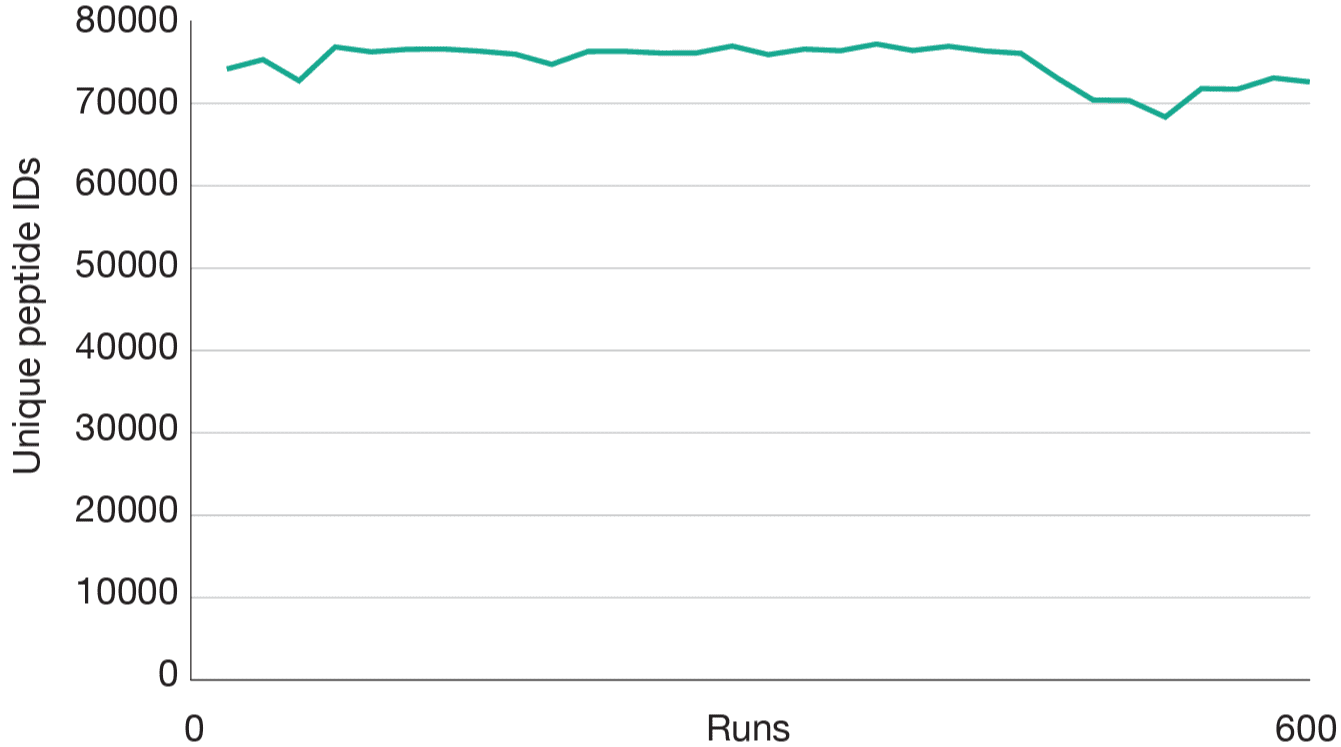
Figure 1: Unique peptide identifications from HeLa QC runs (100 ng) collected throughout a >600‑injection series. Samples were analysed on a Bruker timsTOF HT coupled to a nanoElute2 UHPLC system. Raw data were processed in Spectronaut v20.2
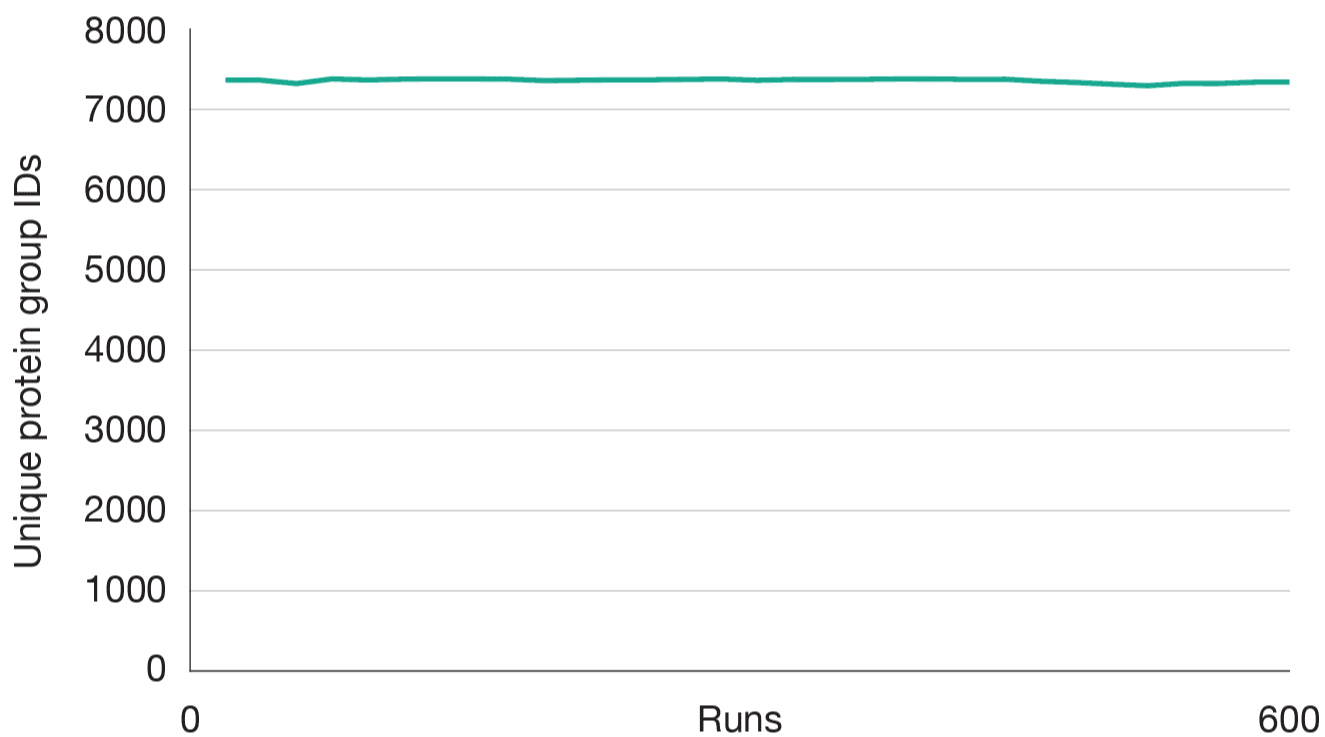
Figure 2: Unique protein group identifications from HeLa QC runs (100 ng) collected throughout a >600‑injection series. Samples were analysed on a Bruker timsTOF HT coupled to a nanoElute2 UHPLC system. Raw data were processed in Spectronaut v20.2
Stable back-pressure across more than 600 runs
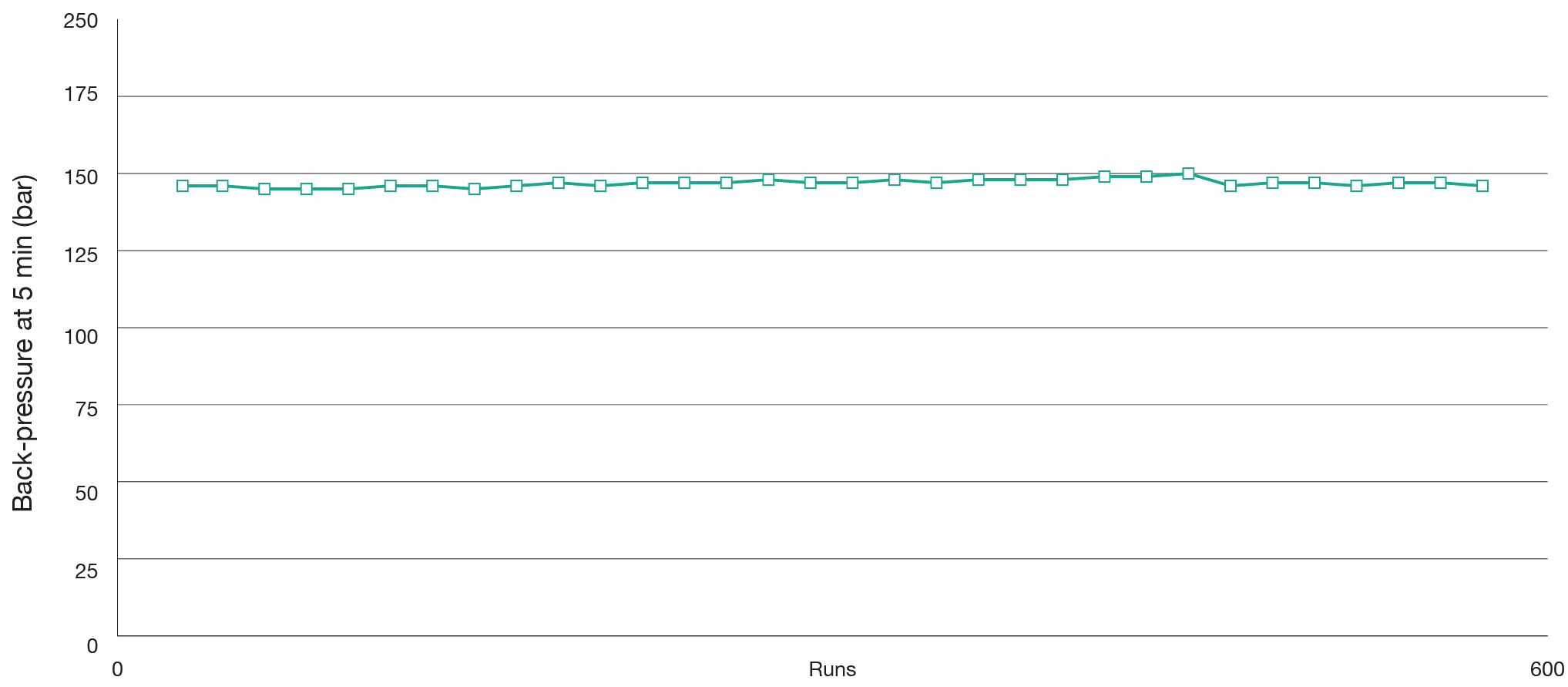
Figure 3: Back-pressure profiles from routine HeLa QC runs (100 ng) were collected throughout a >600‑injection series. Samples were analysed on a Bruker timsTOF HT coupled to a nanoElute2 UHPLC system operated at a flow rate of 0.25 µL/min with the column heater maintained at 50 °C. Back-pressure was monitored across all injections to evaluate column performance and stability over time.
Uniform peak widths across more than 600 runs
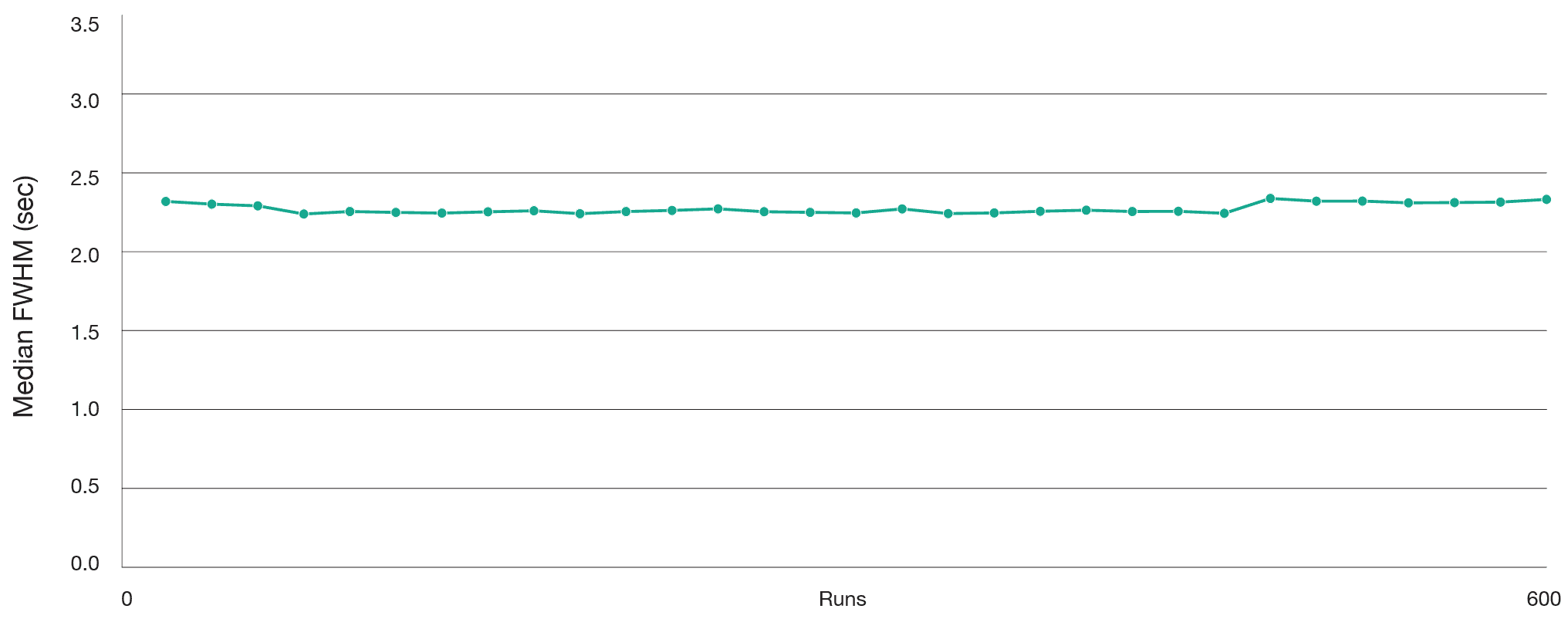
Figure 4: Median FWHM from routine HeLa QC runs (100 ng) were collected throughout a >600‑injection series. Samples were analysed on a Bruker timsTOF HT coupled to a nanoElute2 UHPLC system.
About IonOpticks
IonOpticks produces high-performance chromatography solutions for the global research community. We specialise in the development and manufacture of columns for analytical applications in liquid chromatography with mass spectrometry (LC-MS) and high-end proteomics. Our highly reproducible methods provide a unique ability to enhance the sensitivity of mass spectrometry sample analysis, enabling scientists and clinicians to discover more from their samples. Our team are experts in a broad array of LC-MS platform technologies and are driven by the need to improve chromatographic performance in order to achieve data quality and deep proteome coverage on a whole new scale.
Further Reading
For further resources and technical support, visit our Help Centre at helpcentre.ionoptickscopy.com. To view other application notes, read the latest publications featuring Aurora Series columns, or view the full range of IonOpticks products, visit our website at www.ionoptickscopy.com