
Download
The Aurora® Ultimate™ 25 cm x 150 μm is capable of faster flowrates while maintaining high resolution across the gradient.
Peak characteristics

Figure 1: Example peptides were identified across the 60 min 1.5 μl/min condition. Each peptide shows excellent FWHM and symmetry.
Figure 2: Asymmetry factors were calculated for all identified peptides. The Median Asymmetry factor is equal to 1. This indicates majority of peptides show a Gaussian distribution.
Reproducibility
CV by gradient and flow rate
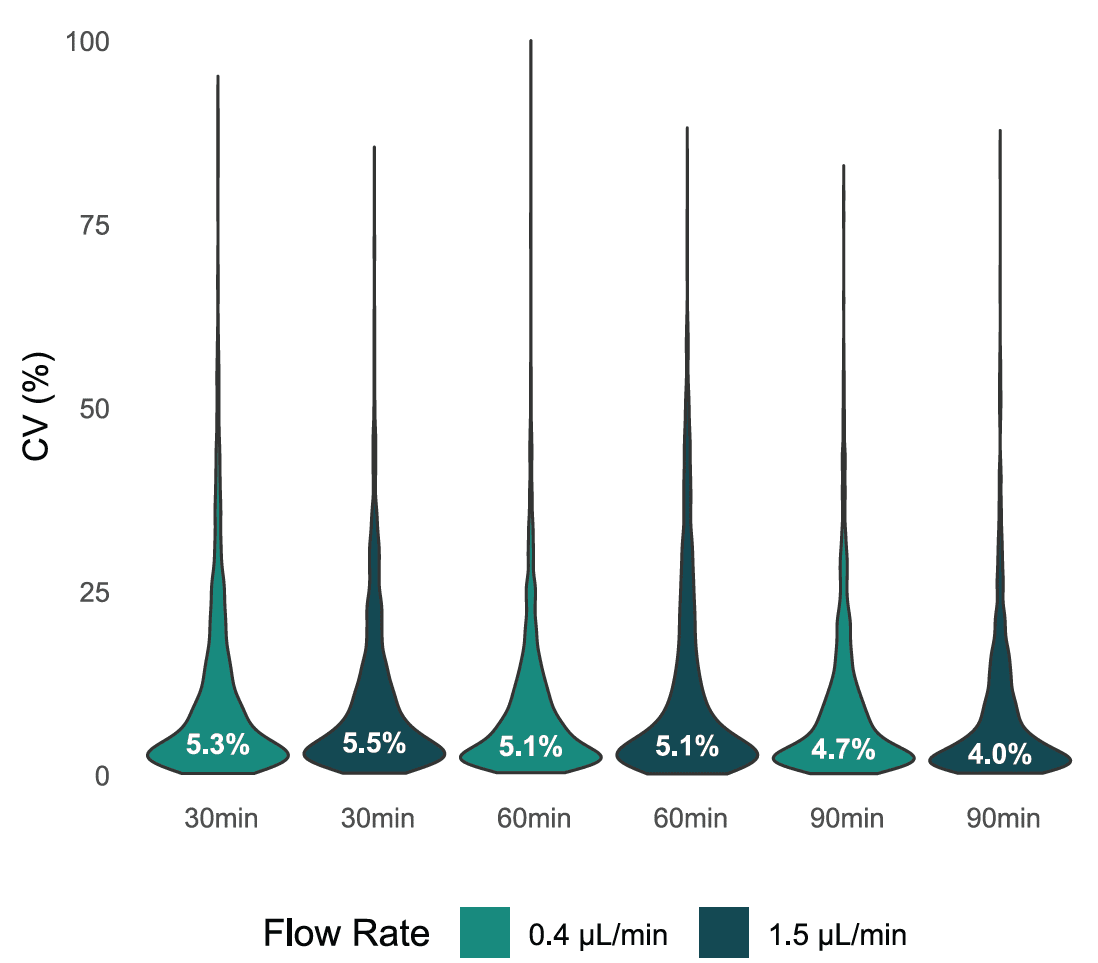
Figure 3: Coefficient of variation was calculated for all identified proteins across the 30, 60 and 90 min conditions and 0.4 and 1.5 μl/min flow rates
(4 replicates). Comparisons of each condition show sub 5.5% median CVs across all samples
Resolution
FWHM by gradient and flow rate
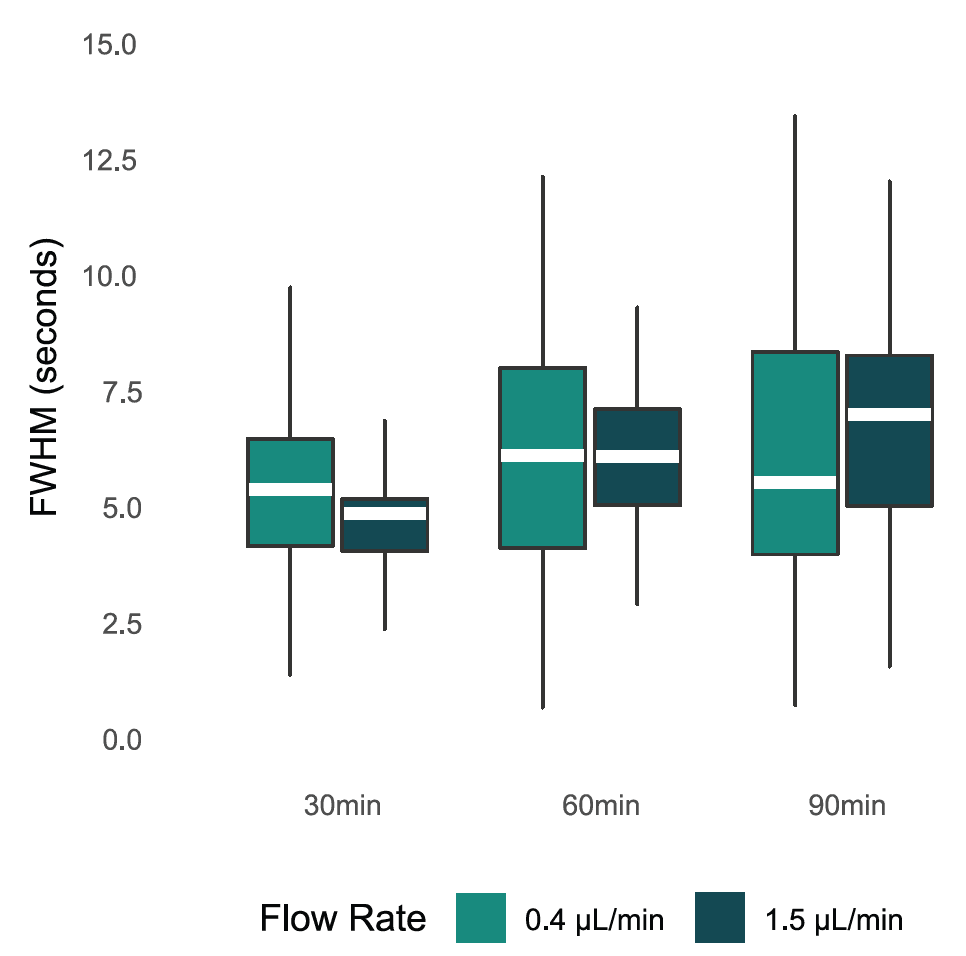
Figure 4: FWHM for all identified peptides were calculated. Each condition shows sub-7 second median FWHM across all gradients and flow rates.
METHODS
100 ng of HeLa tryptic digest was introduced on an NCP3200 Ultimate 3000 LC, separated on a 25 cm x 150 μm Aurora® Ultimate™ column and Bruker Impact II Mass Spectrometer. Solvents were 0.1% formic acid as solvent A and 99.9% Acetonitrile as solvent B. Capillary voltage was set to 1800V, m/z range 200-2000. With AutoMS/MS on, and cycle time 0.5 sec.
R E A D I N G
For further resources and technical support, visit our Help Centre at helpcentre.ionoptickscopy.com. To view other application notes, read the latest publications featuring Aurora Series columns, or view the full range of IonOpticks products, visit our website at www.ionoptickscopy.com

Download